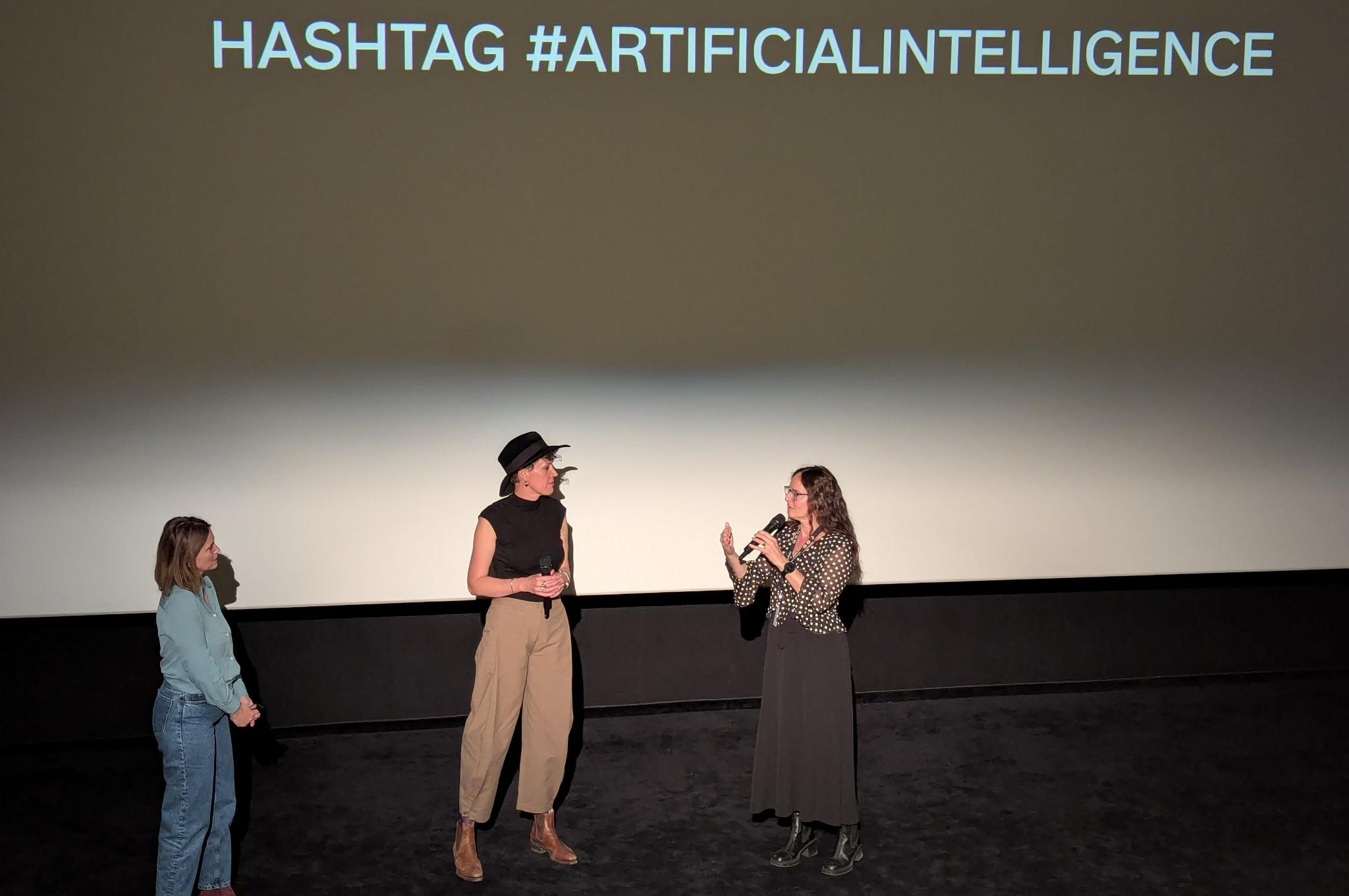
The film takes us through a period of five years from 2020–2025, which couldn’t have been more turbulent for someone tasked with representing Denmark’s— I would argue Europe’s —interests towards the Big Tech complex:
- Between major cultural moments of appreciation and reckoning with social media and technology, for its role in election conspiracies surrounding January 6 or defense in Ukraine.
- From a lone envoy to collaborator of the first Danish Digitalization Minister.
- Through the transition not only of one monarch to anotherMargrethe II → Frederik X but from a Danish minority to a majority government.
- Amidst introduction of powerful EU legislation such as DSADSA = Digital Services Act, DMADMA = Digital Markets Act, and the AI ActAI Act = Artificial Intelligence Act.
- From collaborating with the Special Envoy for Digital Freedom of the newly-established CDPCDP = Bureau of Cyberspace and Digital Policy under Biden, to stonewalling by Trump II and almost open conflict around Greenland.
- Past the peak of the Covid pandemic.
The transition is strikingly illustrated on screen: When Anne Marie starts her tenure as a humble solicitor-named-diplomat, it feels as if Big Tech is having a go at her when they casually invite “Madam Ambassador” over for ice cream. When she finds herself in the role of DSA enforcer, she suddenly gets invited to 5-star hotels on Capitol Hill behind closed doors.
A cast of on-screen narrators adds the necessary technical depth to the film. Whereas the director got anxious when about a third of the audience raised their hands for ‘working on tech,’ there are a number of nuggets that at least neatly summarise the state of the art, if not add a new dimension to it:
- Maria RessaNobel Peace Prize laureate for “reporting on the authoritarian Duterte administration” in the Philippines points her finger at friends-of-friends algorithms for increasing societal polarization.
- She also quips that the frontier AI labs understand barely “70–80%” of their models, so trying to reign the AI in is a futile exercise.
- Dr. Imran RashidPhysician and petitioner for a Danish under-18s social media ban posits that social media can be built to prioritise one of three things: child safety, free speech, or democracy. Each one is feasible, but they are competing interests.
- A staffer, in passing, mentions the V-Dem reports, which are a great (albeit depressing) resource
We get to watch the ambassador work on projects of ever-increasing scale such as Tech for Democracy and the Global Digital Compact. Being appointed at 33 years young, she finds herself mostly a generation below other senior diplomats, and it’s not clear to me whether we watch her growing up, growing complacent, or both (or simply becoming a two-time parent.)
There’s this stunning, almost deafening scene where the ambassador — after a recent diplomatic defeat — talks about how some people would argue that our global human rights institutions are failing us. When pressed on the issue:
Director: What do you think about it?
Ambassador: [lingering pause]
—cut—
The director recounts how the film was itself the byproduct of a failure: Originally, a trio of directors was embarking to make a film about the Internet, with the Danish Tech Ambassador (her predecessor, actually) meant to play but a small part. That film itself never made it to the big screen, but the cameras stayed (as well as the compliance forms.)
While the film closes with a note about how Anne Marie is still (happily) serving in her role, she’s moved out of government and back into industry as a Chief Commercial Officer hoping to bring Europe an edge in the next technological frontier.